Skip to content
Sign up

Blog

The NCACE Blog platform fosters a vibrant community of writers exploring collaborations between higher education and the arts, showcasing diverse stories, experiences, and reflections on cross-sector partnership.

NCACE Annual Report 2020/21: Activities, collaborations and lessons learnt

Rachel Lasebikan, Communications Manager, NCACE

We are delighted to present our NCACE Annual Report 2020/21, providing an informative overview of our first year outcomes involving more than 1,200 people who came together in a dozen events and activities covering our key five areas of work. Our first chapter highlights the key involvement of our Regional Partners in our work on … Read more…

An Overview of ‘The Role of ‘Place’ in Collaborations’: Place-based and Place-focused Cultural Knowledge Exchange’

Emily Hopkins, Senior Manager - Research, Evidence and Policy, NCACE

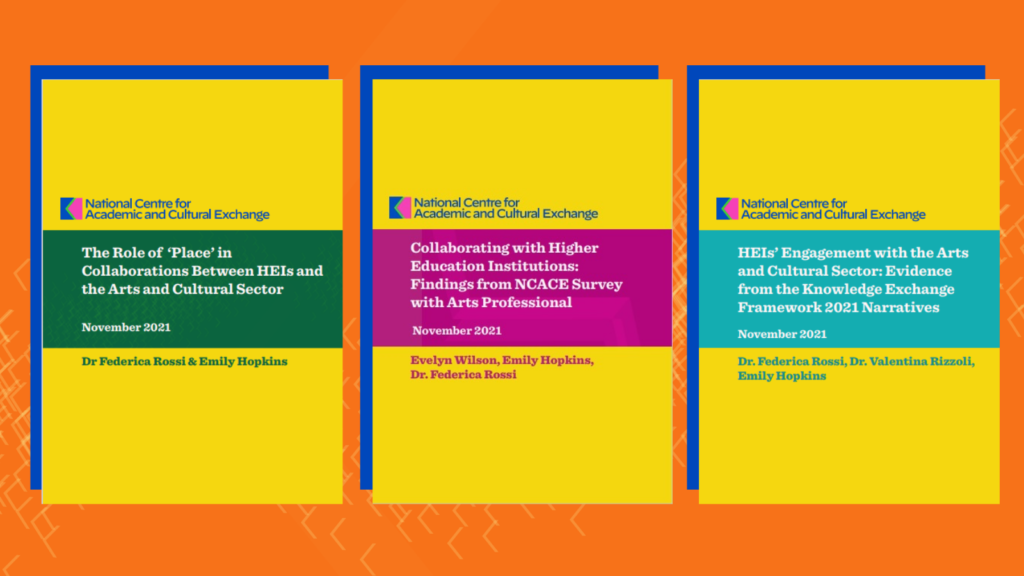
Discussions we have around cultural knowledge exchange collaborations often involve a focus on geography – whether that be physical boundaries, or the sense of place of an area. Much of the work at NCACE this last year has focused on our ‘Placemaking and levelling out’ theme – one of the four core themes guiding our … Read more…

How does academic research generate arts and culture-related impact?

Dr Federica Rossi - Co-Investigator, Evidence and Impacts, NCACE and Reader in Innovation Policy and Management Birkbeck, University of London

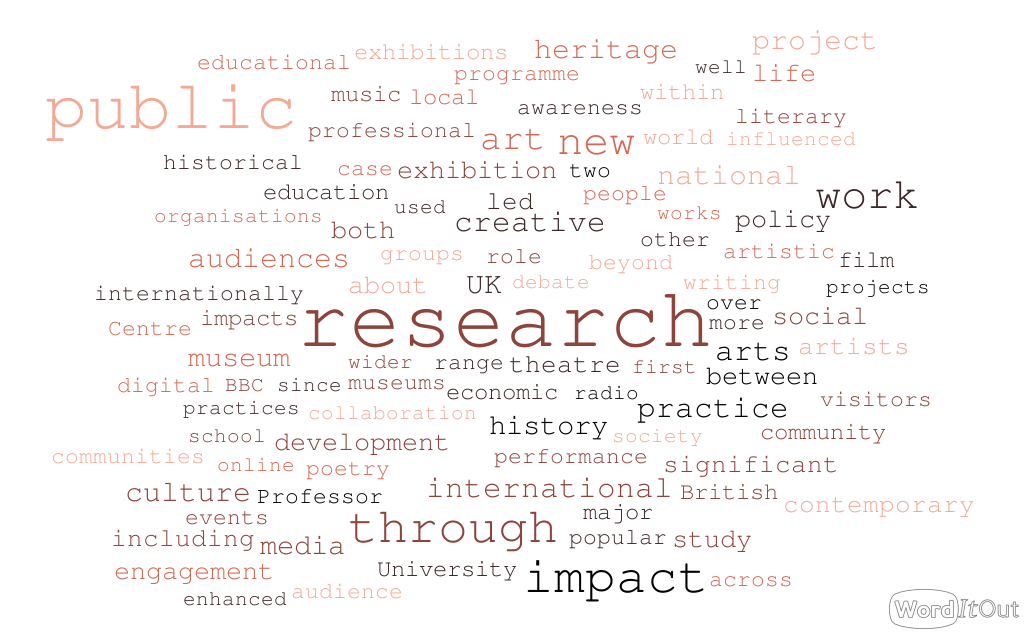
While the Research and Excellence Framework (REF) has been devised primarily as an instrument to assess the quality of university research and of institutional research environments, the information collected is rapidly proving an invaluable source of qualitative information about the type of research that universities do, and how this generates real-world impact. In particular, the … Read more…

Cultural Knowledge Exchange and the Climate Emergency

Anja Rekeszus - Intern, NCACE

On 20th January 2022, NCACE hosted the fifth Evidence Café under the title ‘Cultural Knowledge Exchange and the Climate Emergency’. NCACE aims to build a more comprehensive evidence base around knowledge exchange (KE) between Higher Education and the arts and culture sectors. The Evidence Café is hosted within the context of the Evidencing and Impact … Read more…

NCACE supports four Micro-Commissions to co-create a new and different future for Arts/Culture and Higher Education collaborations

Rachel Lasebikan, Communications Manager, NCACE

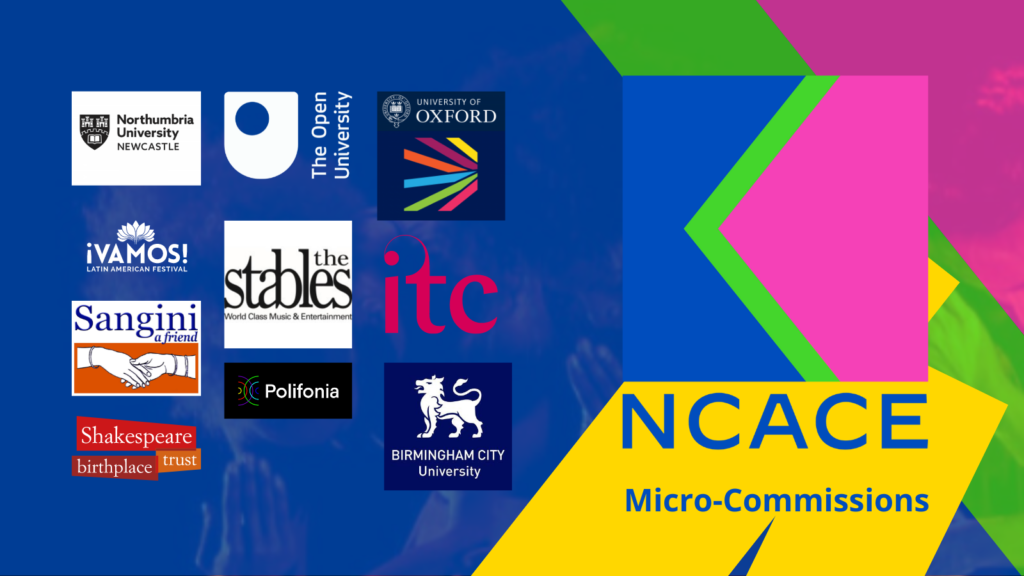
Following on from the NCACE Ideas Pool Open Call ‘Co-Creating a New and Different Future for Arts / Higher Education Collaboration’ in the Autumn of 2021, inviting NCACE Micro-Commission applications, the team is delighted to announce that four awards have been allocated to university and arts/cultural sector partnerships this January 2022.  Outcomes from the four … Read more…

Welcome to the NCACE Evidence Repository: An introduction to our latest resource

Emily Hopkins, Senior Manager - Research, Evidence and Policy, NCACE

After many months of work behind the scenes, the team and I are thrilled to announce the launch of our NCACE Evidence Repository. Since the inception of the centre, it has been critical that we developed a virtual tool that enables users from across all sectors to access resources on the scale, extent, nature, drivers, … Read more…

100 ways to cook pasta.

Vic Newton, Associate Lecturer in Design, School of Design, Northumbria University

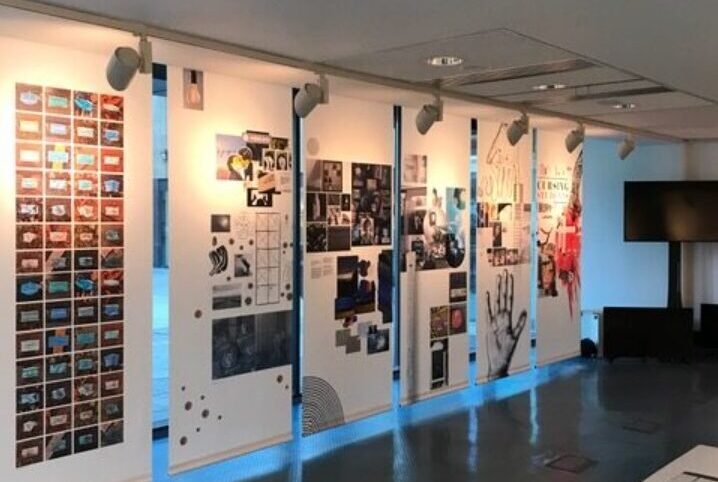
By March 2020 the United Kingdom was in lockdown, as a pandemic swept the world. By Summer 2020, A-Level exams had been cancelled. By August algorithmic grades were announced, swiftly followed by a set of teacher grades. Places were secured, or offered, at universities, accommodation was sorted, hopes were high; daily Covid-19 cases were down … Read more…

The KEF 2021 narratives and what they tell us about HEIs’ engagement with the arts and cultural sector

Dr Federica Rossi, NCACE and Birkbeck, University of London

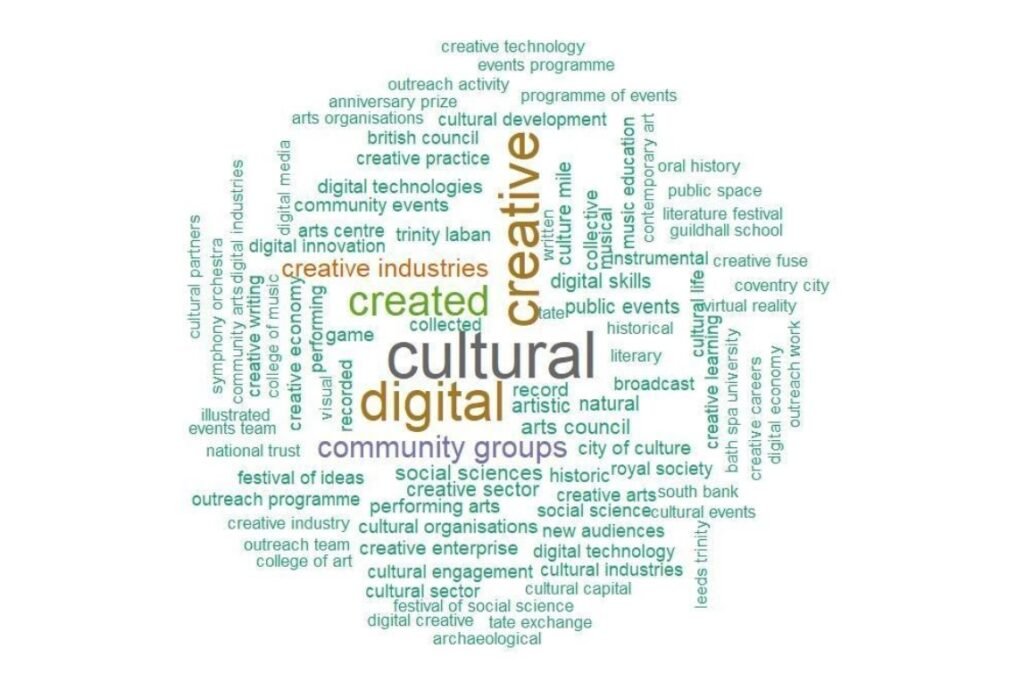
Higher education institutions (HEIs) engage intensively with the arts and cultural sector. However, evidence about this engagement is very often partial and scattered, which makes it difficult to appraise the real importance of this phenomenon. Lack of systematic evidence also makes it harder for practitioners and academics to advocate for the importance and impact of partnerships and other forms of engagement between HEIs and arts and culture.

Around the Kitchen Table

David Thomson, Eat Club session leader and independent food learning producer

For five weeks during the 2021 summer holidays, the youth cooking charity Eat Club teamed up with partners from the Kings Cross Knowledge Quarter to deliver a unique cook and eat programme, themed around each partner’s work.