
What happens when creative practice and policy contexts meet?
Artists often show up in civic contexts to animate spaces, lead creative projects or to engage the public. At Bath Spa University (BSU), we wanted to explore what happens when artists are placed at the strategic end of policy-making organisations, not as designers or artists in residence, but as creative practice researchers - bringing artists’ thinking into policy space. We wanted to understand how creative practice research might influence and interrupt local policy environments, as a form of ‘productive variation’.
BSU is populated with creative practitioners, many employed as lecturers and researchers. In the arts, practice-based research can be messy, searching, critical and iterative. We wondered: what would it mean to move this type of knowing into other spaces, and to rub shoulders with people responsible for local policy making around serious and pressing issues? Could the University make its creative workforce more accessible to the civic infrastructure of the region, and model new ways for artists to use their talents in the world?
At the NCACE Festival of Cultural Knowledge Exchange, we told the story so far of the Creative Policy Fellowships project, which has positioned five creative practice researchers, or ‘Fellows’, working across Fine Art and Music, within policy contexts. Jenny Dunseath went to Bath and North East Somerset Council, working alongside Policy Development and Scrutiny Panels. Keith Harrison was hosted by Back on Track in Manchester, working in the context of criminal justice. Claire Loder went to Bath and North East Somerset Council, working with the Sustainable Communities Team on their Climate Strategy. Suzi MacGregor was placed with the Royal United Hospitals Bath, and Charlie Tweed went to the West of England Mayoral Combined Authority, working with the planning team on a new Spatial Development Strategy. Some of these settings were policy making, while others were policy influencing, operating at governmental and grassroots levels.
We were fortunate to find partner contacts in these policy contexts who had the flexibility to host a Creative Policy Fellow for one day a week for six months, and the openness to approach the relationship without a predetermined outcome in mind. The Fellows did not work to a brief, and nor were they expected to develop an art work. Instead, they were encouraged to bring fresh perspectives, and to use methods that were discursive, curious and informal, to unpick established processes. From the outset we were careful about over-claiming or romanticising the role of the artist as change-maker - both because of the pressure this might load onto the artist, and because of the assumption this sets up about policy workers being uncreative.
The project (funded through the AHRC Impact Acceleration Account) was designed with a clearly defined support structure. As a team we brokered partnerships, administered contracts, created tools for relationship building, offered support sessions and set up an evaluation routine with the cohort – meeting every few months to draw out reflections and research insights with Fellows and partners. We not only wanted to interrogate the Fellowship outcomes, but we wanted to test the conditions necessary to make this work possible.
This type of work is not brand new. It sits within a 60-year tradition of practice, exploring what happens when artists enter institutions and industry with an open brief. The Artist Placement Group, founded in 1966, emerged from the idea that artists are a human resource underused by society — isolated from the public by the gallery system. More recently, Policy Lab and their MANIFEST programme places artists inside government. What sets our project apart from these examples, is the identity of the artists as artist-educators, and the association of the University as a third actor in the relationship.
What have we learnt so far?
Fellows found in their policy partners an openness to shared vulnerability and wayfaring as an exploratory approach. Fellows were supported to observe and listen in meetings, to orientate themselves through conversations, site visits and reading. This took labour and negotiation on the part of the partners.
Creative practice researchers noticed the unspoken rules of engagement, tones of voice, complex languages and hierarchies in the policy space. They also noticed how deeply their policy partners cared about their work and communities.
The artists’ pedagogical identity emerged as an unexpected enabler of trust-building and collaboration, as policy partners recognised their Fellows’ skillsets in facilitation, workshopping, mentoring and communication with diverse student populations. Many of the problems raised in the policy contexts were related to making legible opaque and inaccessible strategies, or supporting younger constituents to have a voice.
While the Fellows utilised the currency of their university experience, they also looked critically at how these dual responsibilities can create a softer, more comfortable framework for landing art practice in policy space. That softness and safety is both enabling, and a risk to artists’ capacity for provocation. The Fellows drew significantly on their teaching practice to set up exercises and tools - always with an eye on pushing established practice through DIY methods, speculative thinking, acts of creative translation, game-playing and conceptual propositions.
There were other risks that the project could be extractive of people’s already-overstretched time, without having made any overt difference to policy spaces. But what occurred in most settings was a “symbiotic exchange” of learning. Some policy partners told us that their work is often frustrated by tight deadlines, stalled plans, changing political agendas, and lack of effective public engagement. They felt the Creative Policy Fellowship created a rare space of permission for imagination, fun and the disruption of linear thinking.
We describe the framework of this project less like a scaffold, and more like a climbing frame – a structure to be held and played in. The open brief has been crucial – it is the structural condition that makes everything else possible. Cultivating a state of ‘not knowing’ as a mutual methodology is a big ask for pressured policy workers, but the appetite for bringing more creativity, connection and vulnerability to internal systems is there. As we move into phase two of our project, we want to continue putting creative pedagogy expertise in dialogue with policymakers, and using creative practice research to build radical, relational bridges between the institutional systems that affect our daily lives.
Read more about Bath Spa University’s Creative Policy Project here, including a case study from one of the fellowships.
Listen to the NCACE Festival session, What happens when creative practice meets policy? - 21 April 2026 (21 April 2026). Slides used during the session are available here.
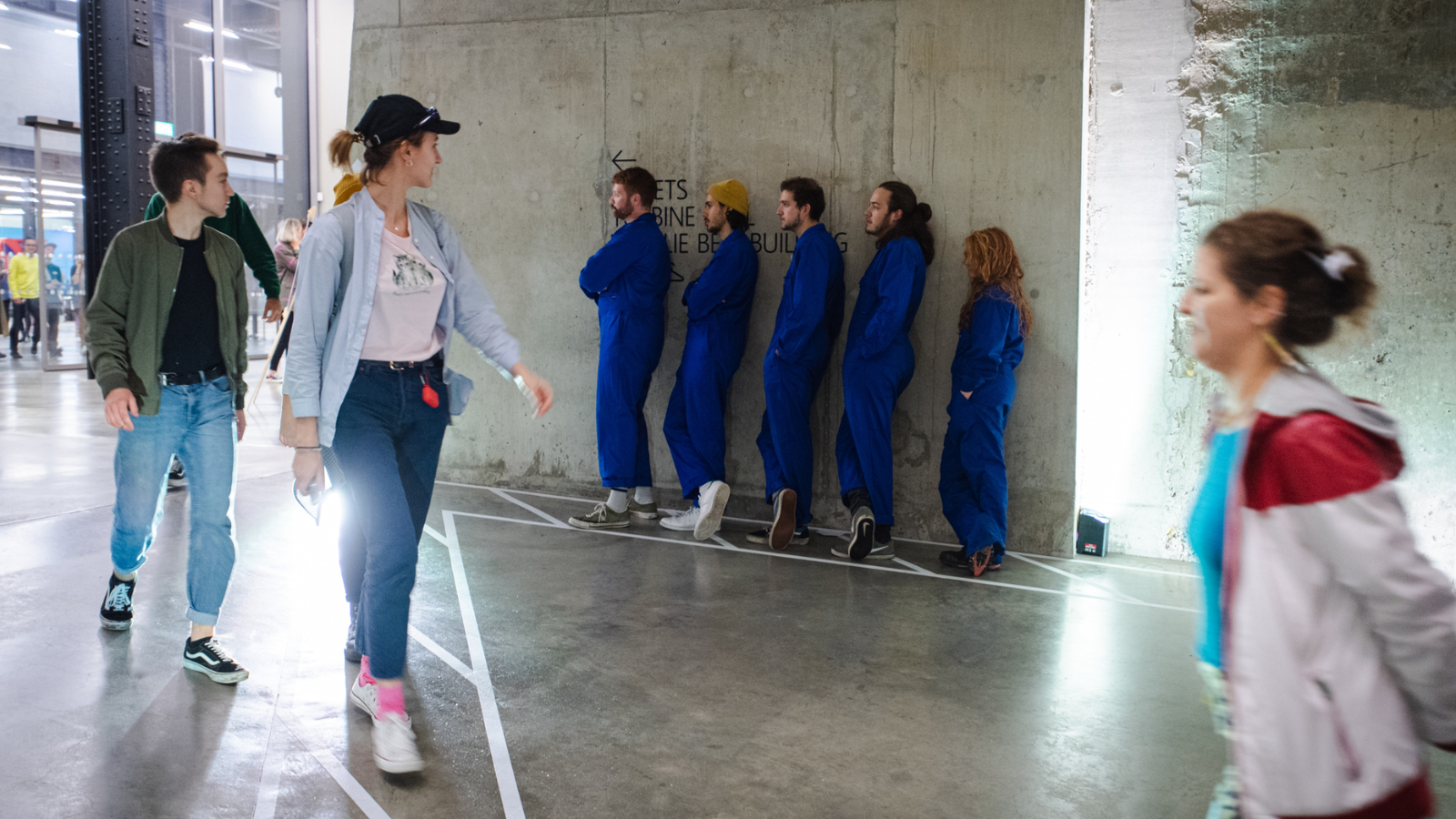
Image 1: Inventory of behaviours, Tate Late. Addison and Kidd
Image 2: By Jakub Knap (2024) as part of Dependent Machines by Natasha Kidd. Image courtesy of Bath Spa University.