Skip to content
Sign up

Blog

The NCACE Blog platform fosters a vibrant community of writers exploring collaborations between higher education and the arts, showcasing diverse stories, experiences, and reflections on cross-sector partnership.

Artists and Academics – The Perfect Marriage.

Jemma McDonnell, co-founder and co-director of The Paper Birds Theatre Company

I am an artist who is married to an academic. We often joke that whilst it seems like our jobs are worlds apart, my partner who researches addiction, and myself; co-founder of a devising political theatre company, are both fundamentally trying to do the same thing – we are trying to better understand and then … Read more…

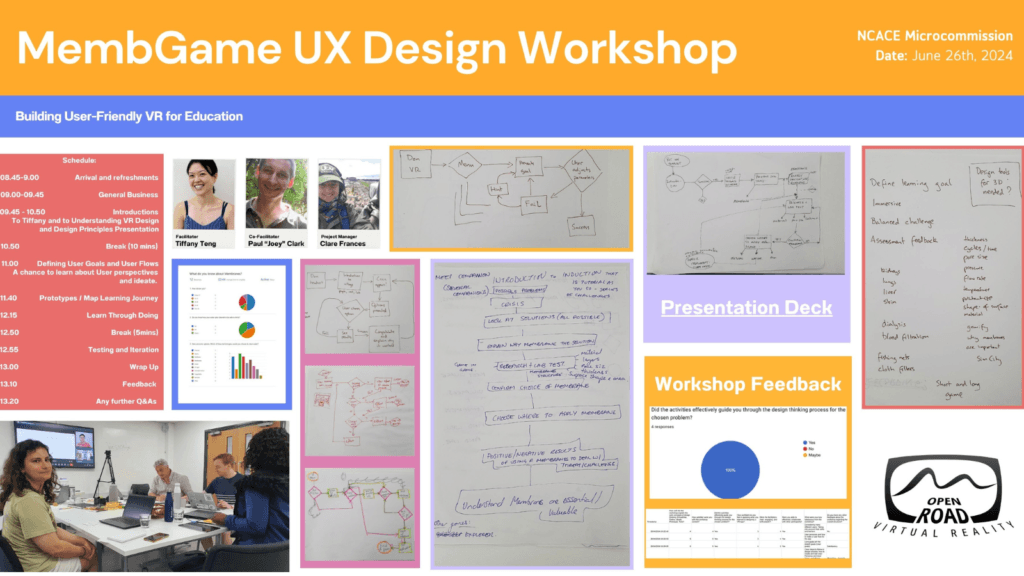
NCACE Micro-commission: MembGame UX Design Workshop

Clare Frances (Co-Project Manager)

The MembGame Research Collaboration are excited to explore how immersive technology, especially Augmented or Virtual Reality (AR/VR) with its ability to zoom in and scale to macro and microscopic levels in a 360 environment, can increase inclusion, accessibility, education and engagement in this area of STEM. We also aim to contribute, with co-creation opportunities, to … Read more…

Generating societal impact from collaborations between universities and arts and culture organisations (ACOs): evidence from NCACE’s survey with arts and culture professionals in the UK

Federica Rossi (Universita' di Modena e Reggio Emilia), Ning Baines (University of Leicester) and Evelyn Wilson (NCACE)

When we established NCACE in late 2020, a key part of our mission was to create an enhanced understanding of the impacts that arise from universities and the arts working together. One of the first pieces of work we undertook was to develop what we believe was the country’s first substantial survey with the arts … Read more…

Stretching embodiment: Excursions in multi-modal extended realities

Professor Vicky Hunter, Professor in Site Dance (Bath Spa University)

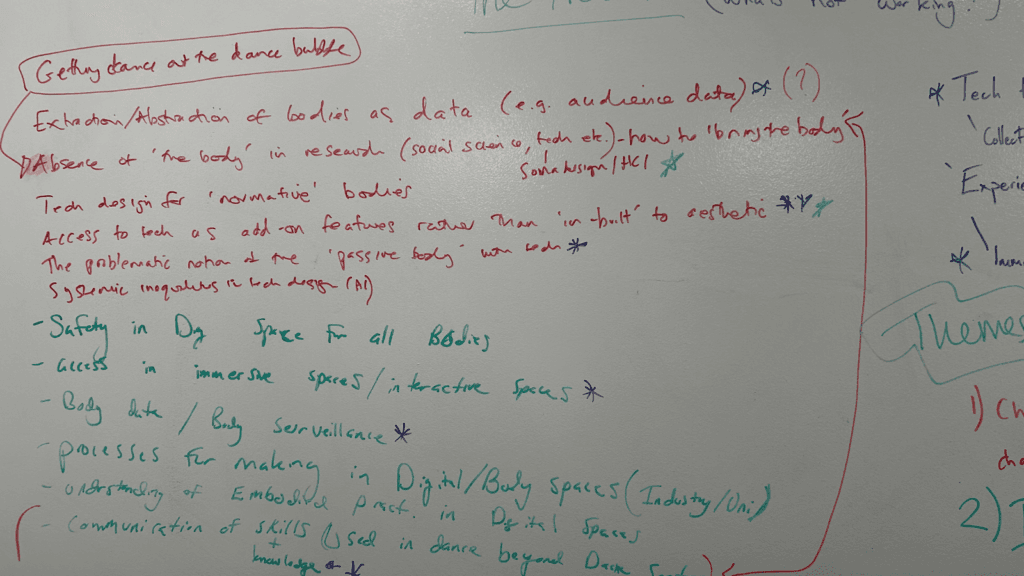
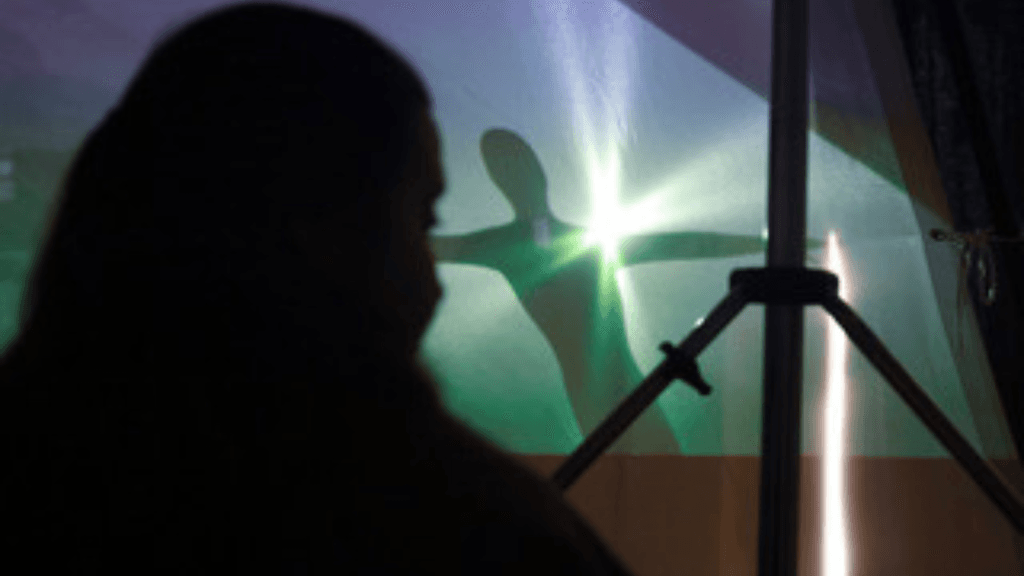
VR, AR, and immersive site-specific and interactive art experiences engage bodies with lived and virtual spaces in particular ways. They hold the potential to extend embodied, somatic experiences and connect people with multiple and simultaneous ‘spacetimes’ (Manning 2011).  On the 3rd June 2024, five researchers (movement artists and practitioner-researchers) working with AR and VR, digital … Read more…

Exploring the Impact of Our Digital Footprint: How Dance, Technology, and Social Media Can Make Us Question Our Online Presence

Katie Dale-Everett, Choreographer

Two artists and an academic come together to uncover the answers. Katie Dale-Everett (Choreographer), Thomas Buckley (Artist), and Daisy Bow du Toit (PhD student in Craft and Social Media at Kingston School of Art) each bring distinct backgrounds and approaches to art, community engagement, and thought. United by their work with technology (be that emergent … Read more…

Community Innovation Practitioners: Fostering a Community of Practice

Dr Lauren Baker Mitchell, Northumbria University and Georgina Aasgaard, University of Liverpool

In a rapidly evolving world, the ability of cross-sector partners to share knowledge and collaborate effectively is essential for driving innovation and change. Communities of practice – groups of people who share a common interest or field of expertise – play a vital role in facilitating co-creation, knowledge exchange and fostering a sense of belonging. … Read more…

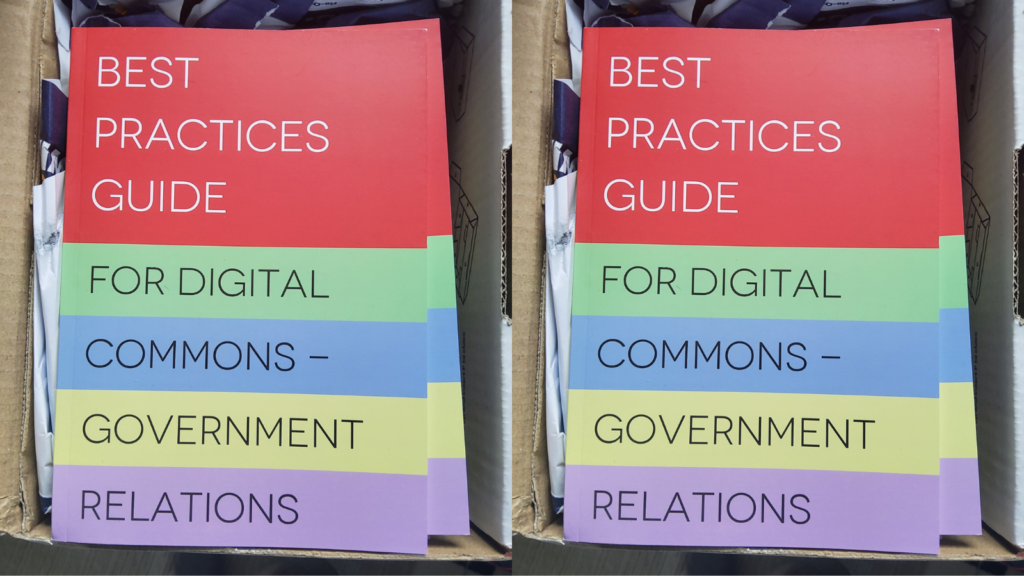
Incorporating digital commons into government policies: An introduction to the Digital Commons Policy Council’s Best Practices guide

Angela Daly (University of Dundee), Gary Leeming (Liverpool City Region Civic Data Cooperative), Riccardo Nanni (Fondazione Bruno Kessler) and Mathieu O’Neil (University of Canberra)

What are the digital commons and how can they be supported and promoted in government policy? In order to implement technology for social good, we need to understand how technologies fit within the social order, the values they embody and who has the power and ability to improve them. One major player in this scenario … Read more…

New money for old rope; repurposing open knowledge from Wikidata

Dr Kirsty Ross (Industrial Liaison) and Grace Young (Student) - School of Computer Science, University of St Andrews

The wonderful world of Wikidata Most people are familiar with Wikipedia, the world’s largest encyclopaedia and source of most of the answers whenever you talk to Alexa or Siri. Higher education initiatives to close knowledge gaps on Wikipedia are also increasingly common, mostly focusing on improving and adding articles. However, underpinning Wikipedia is the database … Read more…

Culture, Collaboration and Knowledge Exchange: Technology for Social Good

Rachel Lasebikan, Communications Manager - NCACE

This policy event took place on Thursday, June 20th, 2024. Technology for Social Good is an increasingly important theme within the NCACE framework. This event, introduced by Evelyn Wilson (Co-Director, NCACE), created a platform for crucial conversations and information sharing on social innovations, fostering dialogue about supporting people, place, and the planet. The showcased projects … Read more…

The Curious Case of Grieving MC Ty on Social Media

Roger Robinson - Poet, Writer, Performer

The following piece was the closing reflection presented by Roger Robinson (Poet, Writer, Performer) at our recent Culture, Collaboration and Knowledge Exchange: Technology for Social Good event in June On Black British Grief and Social Media Whether it’s the British Nigerian communities’ use of WhatsApp to share local cultural events and maintain a close-knit sense … Read more…