
Before the Project Begins: What Academic-Heritage Partnerships Actually Require
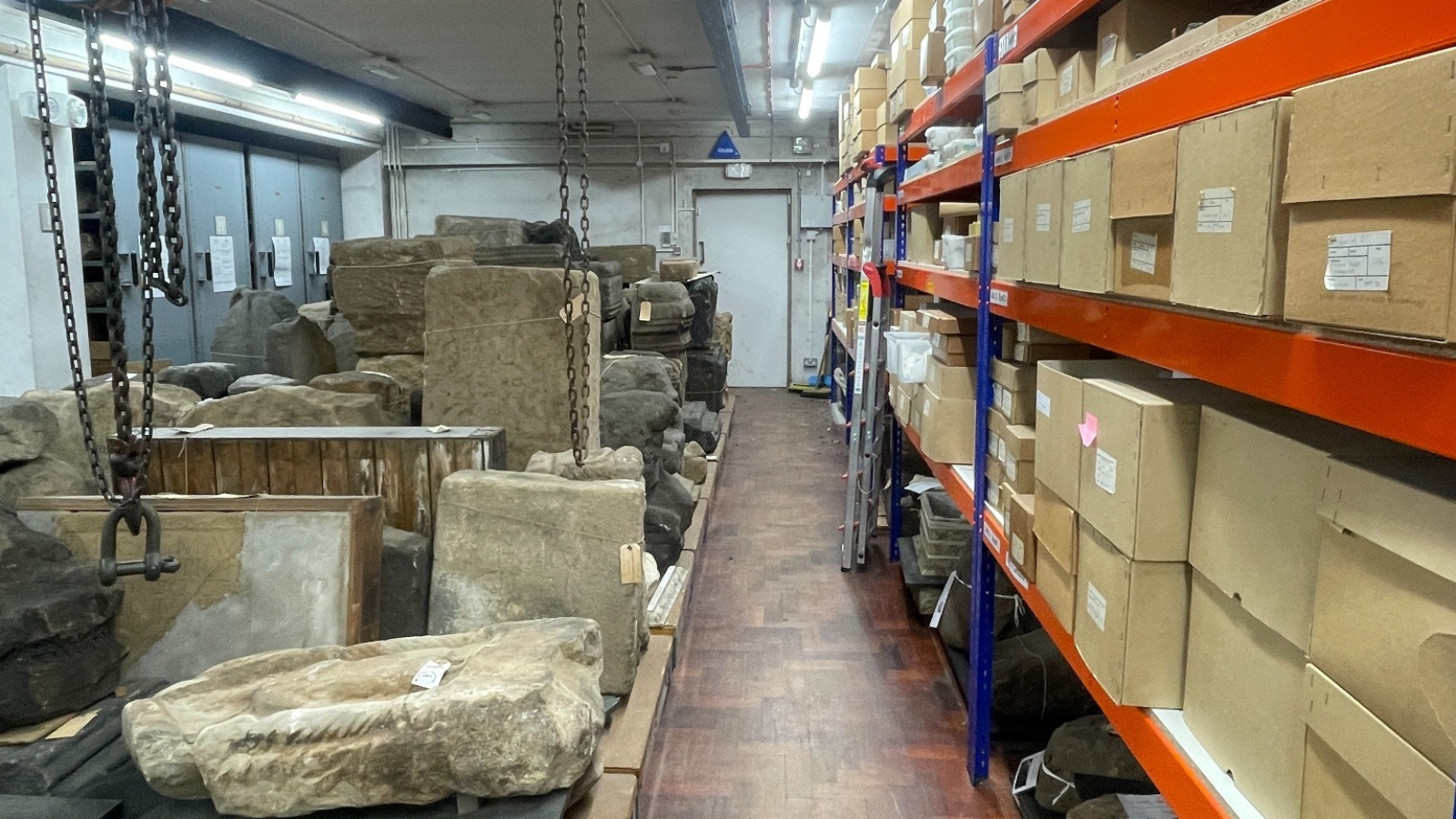
This post reflects on what makes academic collaborations with heritage partners work in practice, arguing that the most valuable partnerships are built through trust, mutual understanding and long-term investment, much of which begins well before a project formally starts.
Academic-heritage collaboration is a bit like gardening. Everyone admires the summertime blooms, but not everyone wants to spend their afternoons tending the soil. From the outside, successful collaborations can look as though they materialise at the outset of a large project. In my experience, they begin years earlier with a cup of coffee.
The world of arts and humanities research still carries an image of the lone scholar: an introvert who lights up when given the chance to discuss something very niche. I have been guilty of this myself, explaining the meaning of the Latin word stercus, literally meaning dung, while discussing the duties of Roman legionary soldiers in second-century Egypt. But this vignette is increasingly unhelpful. It does not reflect what it takes to lead a major research programme, nor what it takes to build meaningful partnerships with heritage organisations.
My current project, Connective Frontiers, brings together partners working across Roman frontier heritage in Britain, Europe and North Africa. It involves a national heritage organisation, an independent charitable trust, a professional finds network, UNESCO-linked advisory structures, and colleagues in Libya. These partners differ dramatically in scale, remit, location, resources and institutional rhythms. That is precisely why the collaboration is exciting, but also why it has to be managed carefully.
I have seen many near misses resulting from badly organised, underdeveloped or poorly negotiated partnerships, including a major knowledge exchange-led grant application submitted without a single named partner on the project. The academic began with research questions in mind, became fixed on them, and did not leave enough time to develop a proper collaboration. In my own career, many of the partnerships that now underpin my work as a Future Leaders Fellow began as passing conversations. They became periodic check-ins, shared interests, practical exchanges and, over time, trusted professional relationships. People I once found intimidating because they led major museums, curated internationally significant collections or held the keys to wider networks are now colleagues, mentors, problem-solvers and friends. That did not happen because a project required them. It happened because the relationship came first.
Professional relationships with partners are increasingly more important. Collaborative doctoral awards, knowledge exchange requirements embedded in funding schemes, and persistent questions about the public value of the arts and humanities have all raised the stakes. Many early-career researchers want to know what successful applicants are doing that they are not. Having won a Future Leaders Fellowship and advised academic colleagues on knowledge exchange and impact, I would argue that much of the difference lies in consciously developing interpersonal skills, relationship-building etiquette, negotiation ability, persistence, and the audacity to have a big vision. Below are my recommendations for beginning the work of building meaningful intersectoral relationships.
Build relationships before you need them
We tend to talk about successful collaborations through their most visible outputs: exhibitions, publications, public programmes, digital resources, policy contributions and visitor experiences. Yet, the most important work of partnership often happens long before anything visible is produced. It happens in conversations, site visits, introductions, patient emails, shared frustrations and the gradual development of trust. Relationships cannot simply be switched on when a project, grant application or problem appears. Many academics approach a museum, heritage organisation or community group only when they need access, a venue, a letter of support or a convenient route to impact. Sometimes this works, but it is rarely where the deepest collaboration begins. The connections that last are built after the first meeting, not during it. Follow-up is the secret weapon. For this reason a useful follow-up question is not: “How can this partner help me deliver my research?” It is: “What does this organisation care about, and where might our interests genuinely overlap?” That shift changes the nature of the conversation from extraction to exchange.
For me, the Vindolanda Trust is a good example of what this looks like in practice. On paper, the Trust is a project partner supporting a conference, offering accommodation, providing expertise, collections knowledge and public communication. In reality, that partnership rests on something less easily captured in a work package: years of mentoring and conversations about Roman frontier research, interpretation and the realities that come with working on sites that matter to the public. The Vindolanda Trust is part of a wider conversation about how Roman frontier heritage are and can be understood both in modern Britain and globally.
Understand different rhythms
Universities and heritage organisations work to different rhythms. Academic projects are shaped by funding deadlines, publication cycles, REF narratives and fixed-term contracts. Heritage organisations are shaped by visitor seasons, collections care, staff capacity, conservation needs, local communities, public expectations and, very often, severe resource constraints.
This became very clear in my conversations with English Heritage about Housesteads. From the outside, it would be easy to say that a research project can “feed into interpretation”. In practice, this means understanding the organisation’s priorities, site management challenges visitor-facing plans, other funding application timelines, exhibition redesign timelines, available staff time, collections access, and the practical realities of working with material that may be only partially catalogued. In those discussions, I had to learn the difference between academic blue sky thinking and a heritage timetable. I remember site visits, annotated plans, colour-coded notes, back-and-forth conversations about Gantt charts, and more than one moment when a curator had to explain the same institutional reality to me several times before I properly understood it. That process was not an obstacle to collaboration. It was the collaboration.
This also means thinking carefully about the difference between opportunities and obstacles. A lack of time may become a reason to design a smaller, better-focused activity. A collection that cannot travel may become the basis for a digital resource. In the case of English Heritage, the constraints around collections, interpretation and future exhibition planning became a way to think more carefully about how research could genuinely add value. Rather than abandoning the collaboration because the collection was not fully catalogued and digitised, we set out to create a post that could achieve this objective and by doing so offer a fantastic intersectoral opportunity for a post-doc, as well as provide the basis for a substantial package of original research on the material, once the necessary cataloguing is completed. Collaboration is not about pretending constraints do not exist. It is about understanding what they reveal, and what they might make possible if the right structure, funding or partnership model can be put in place. The obstacle is often the way.
Negotiate collaboration: from positions to shared interests
Negotiation is part of knowledge exchange, but not in the sense of a hard-edged battle over terms. It is the art of understanding what each party truly needs. In many collaborations, the first stated position is not the real issue. A curator might say, “We cannot host the workshop in June,” when the underlying issue is that June is the busiest visitor period. An academic might say, “We need access to the collection,” when what they really mean is that they need to understand what kind of research question the material can support.
When collaborators move from stated positions to underlying interests, more imaginative solutions become possible. This requires academics to listen before persuading. We are trained to explain the value of our research, but heritage partners are far more likely to engage when they feel that their expertise and priorities have been genuinely understood, not merely acknowledged.
This matters especially in international partnerships. In working with colleagues connected to the Department of Antiquities of Libya, I could not simply export a UK conversation about Roman frontiers and assume it would have the same meaning in North Africa. The project touches on decolonising Roman frontier studies, the misappropriation of African sites by imperial agendas, and the contemporary significance of heritage in post-2011 Libya. Listening in that context means recognising that the same Roman frontier can carry very different political, scholarly and emotional meanings depending on where one stands.
The goal is not to convince a partner that your project is important. The goal is to reach the point where they can say: yes, this speaks to a challenge we also recognise. This is why I strongly advise against approaching a potential partner with a very fixed vision of what you, as an academic, want to do. When developing my Fellowship proposal, I presented the broader issue in my field and a proposed theme as one possible response. The details of what, how and when were then worked out with partners, taking their priorities into account.
Dr Frances Mcintosh, my partner at English Heritage and the Curator of Hadrian’s Wall, captures this well:
‘When Anna emailed me saying she was looking to pull together an application for an FLF and wanted to work with me as a partner, I was unsure how EH and my work would fit. However, the planning was still at an early stage, so I wasn’t just signing up to being a partner to a fully ‘set’ project. I felt like a true partner in creating the project, making sure that the project worked for me, as well as Anna. In my view, this made the project stronger both for its funding bid, and for its success going forward.’
Diving into hard negotiations over budgets, ownership or visibility too early can make both parties defensive. When the first conversation is about what each side might lose, people naturally begin to protect themselves. When the first conversation is about what might be created together, the partnership has room to breathe.
Create value before dividing it
The strongest partnerships are not transactional. They are not built around the simple exchange of one resource for another. Poor collaborations often begin by asking who gets what: whose logo appears first, who leads the event, who controls the data, who owns the output and who pays for what. These questions matter, but they should not be the first or only questions.
The better starting point is to ask how the partnership can create something that neither side could have produced alone. In heritage work, that might mean turning an under-used collection into new research, developing interpretation that is both academically rigorous and publicly meaningful, or building a project that supports conservation, community engagement and scholarly publication at the same time. The best collaborations enlarge the possibilities before they begin to allocate the benefits.
This is where professional and international networks become more than dissemination channels. The Roman Finds Group, for example, offers a specialist community through which work on Roman material culture can be shared, tested and discussed. The Bratislava Group, through its role in the Frontiers of the Roman Empire as a transnational World Heritage site, offers a different kind of infrastructure: an international advisory network concerned with credibility, conservation, capacity-building, communication and communities. In both cases, the value of collaboration is not simply that the project gains an audience. It is that the research enters communities of practice that can shape how Roman frontier heritage is interpreted across sites, countries and professional traditions. This also means that rather than worrying about ‘who owns what research’, ideas develop, collaborations can flourish and as a result the field grows stronger.
Dr Rebecca Jones, co-Chair of the Bratislava Group and Keeper of Scottish History and Archaeology at National Museums Scotland notes:
‘Partnership working is key to projects that create impact and public benefit, whether working at local, national or international levels – the whole is greater than the sum of its parts. Anna’s project is actively taking forward what we aspire to do: work together, co-create initiatives and involve stakeholders in decision making. Anna’s project is so exciting because of her collaborative approach and the potential to expand frontiers research and involve new partners who bring different perspectives.’
Recognise the hidden labour
Partnership work requires someone to translate between institutional cultures: explaining university processes to heritage partners, and heritage realities to universities. It requires careful expectation-setting, realistic budgeting and a willingness to cost the time of partners rather than assume goodwill will cover everything. It also requires humility. The academic researcher is not always the most important expert in the room.
In the case of Connective Frontiers, partner contributions include curatorial expertise, access to collections, advice on interpretation, marketing support, public-facing space, conference hosting, accommodation, advisory board time, professional networks and community links. These are not small favours. They are forms of labour, infrastructure and intellectual contribution.
Such generosity is central to collaboration, but it should not be confused with relying on unpaid labour. In this context, generosity means sharing contacts, credit, opportunities and information. It means making introductions, celebrating partners’ achievements, inviting them into intellectual conversations early, and thinking about what would genuinely help them beyond the immediate needs of a grant application. It also means recognising when goodwill needs to be matched by resources.
Manage the relationship, not just the project
One thing I have learned is that partnership management is not separate from project management. A complex collaboration cannot be held together by goodwill alone. It needs structure: clear timelines, named points of contact, realistic expectations, regular check-ins, and an honest understanding of what each partner can contribute at different stages.
For Connective Frontiers, this means working across different scales at once. There are site-specific conversations with English Heritage about Corbridge and Housesteads; research and interpretation conversations with the Vindolanda Trust; specialist artefact networks through the Roman Finds Group; UNESCO-facing discussions through the Bratislava Group; and North African partnership-building through colleagues in Libya and the wider Frontiers of the Roman Empire MENAT network. Some of these relationships are local and practical. Others are international and strategic. All need care.
A practical tool I find useful is to think of each partner relationship as having its own rhythm, value and risk. What does this partner need from the project? What can they realistically offer? What decisions need to be made with them, not merely reported to them? What pressures might affect their ability to participate? What does success look like from their perspective? Asking these questions regularly helps prevent collaboration from becoming a decorative layer placed on top of research.
Think at the scale of the impact you want
Scale is not only about money or size. It is about the seriousness of the ambition and the depth of the relationships needed to sustain it. If the aim is simply to run a workshop, a short-term partnership may be enough. But if the aim is to change how a collection is understood, how a site is interpreted, how communities engage with the past, or how heritage contributes to public life, then the collaboration has to be imagined differently from the start.
In my case, the ambition is not only to produce research on Roman frontiers. It is to connect the northernmost and southernmost frontiers of the Roman Empire in public interpretation, to bring British and North African evidence into dialogue, and to ask how histories of empire, migration, military communities and colonial scholarship shape the way sites are presented today. That kind of work cannot be done by one scholar alone. It needs curators, finds specialists, international heritage advisors, British and North African scholars, site managers, community partners, project staff and funders willing to recognise that relationship-building is part of the research infrastructure.
This is where the gardening metaphor becomes more than a pleasing image. Cultivation is work. Good partnerships do not grow because we sprinkle impact language over a finished research project. The work before the project is the project’s root system. The roots grow because time has been spent preparing the ground: building trust, understanding local conditions, recognising different forms of expertise, and ensuring that everyone involved has the resources to contribute properly. Funding, outputs and evidence matter, but relationships are the infrastructure that allow those things to flourish.